
27-04-2026 20:52
 Lothar Krieglsteiner
Found on hanging tiwg of Olea europaea in dried-ou
28-04-2026 22:51
 Bernard CLESSE
Bonsoir à toutes et tous,Pourriez-vous m'aider à
29-04-2026 08:01
Lothar Krieglsteiner
... on twig attached to small tree of Citrus auran
29-04-2026 10:44
Lothar Krieglsteiner
growing at moist, drying-out soil at the side of a
28-04-2026 20:33
Vitus SchäfftleinHello, I found Trochila ilicina on Ilex aquifoliu

28-04-2026 21:50
 Pablo Sandoval
Hola a todos,Espero se encuentren bien. Hace mucho
27-04-2026 18:05
Lothar Krieglsteiner
... still attached at standing tree. The green con
28-04-2026 20:07
Lothar Krieglsteiner
... on twig in the air at standing Ceratonia siliq
27-04-2026 18:48
Tony MoverleyCollected 23rd April 2026, Norfolk, EnglandSwarms
Setose ascomata on Trifolium arvense
Gernot Friebes,
01-01-2013 16:51
a friend sent me this tiny ascomycete growing on Trifolium arvense. It bears some resemblance to Capronia but differs in ascospores with inconspicuous appendages and present hamathecium. We have no idea where to put this fungus so we'd be happy for any help.
I wish all AscoFrance members the best for 2013!
Best wishes,
Gernot
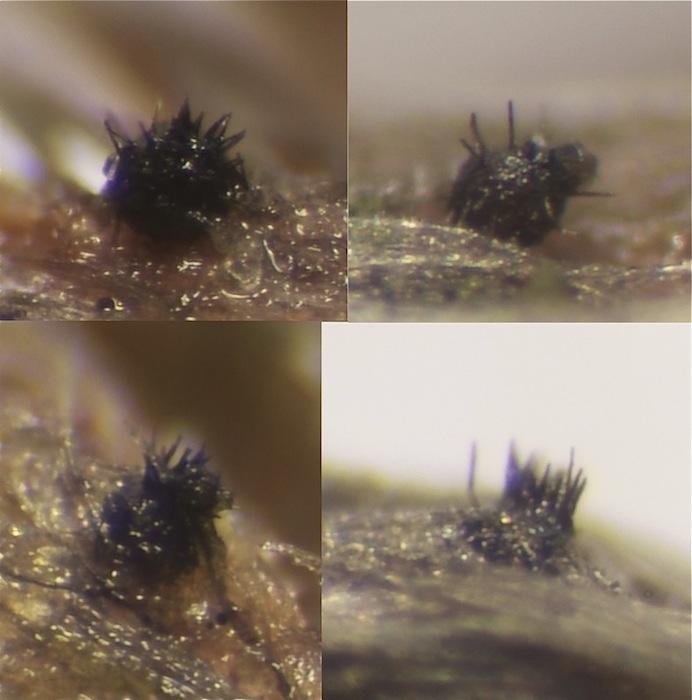
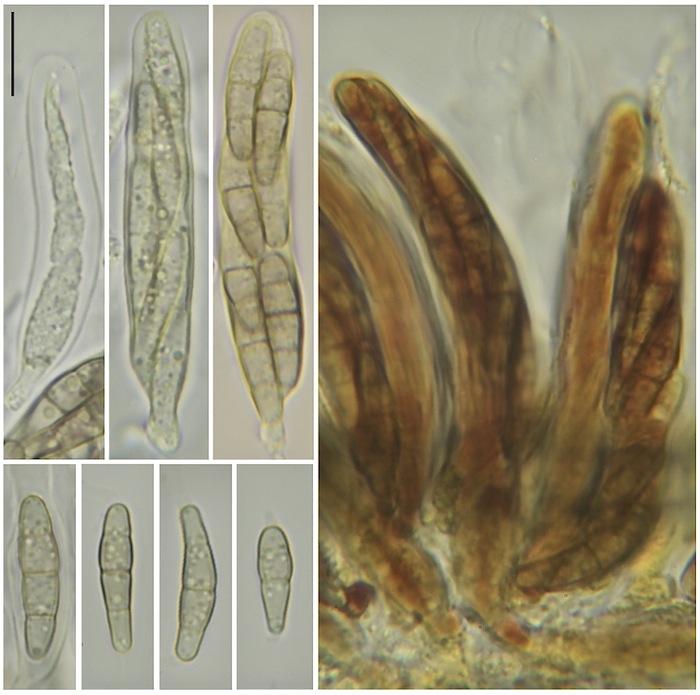
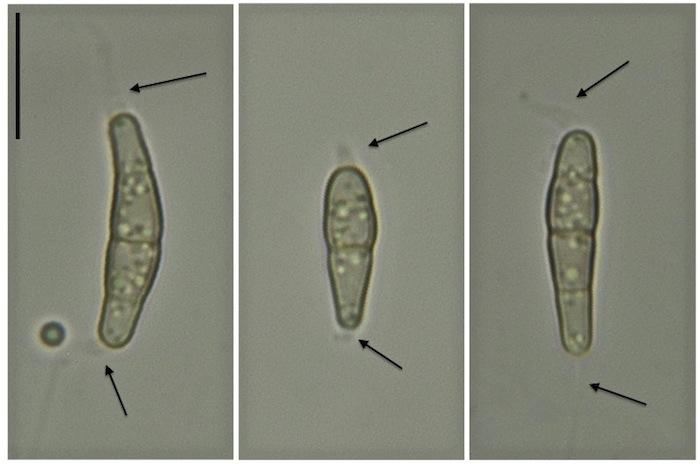
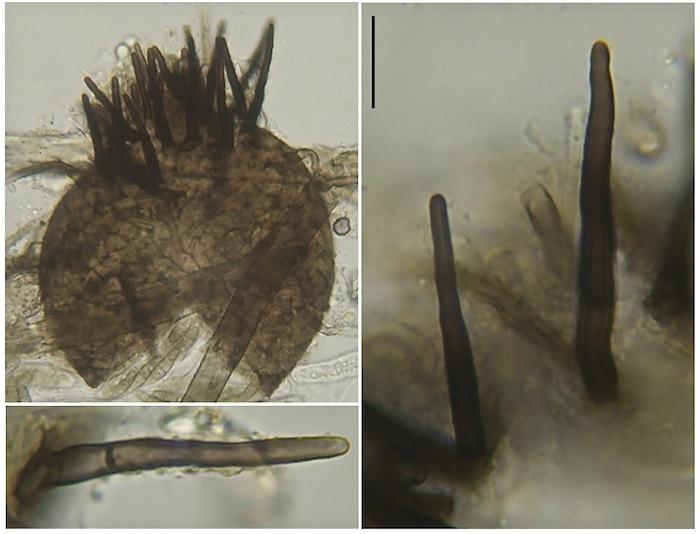
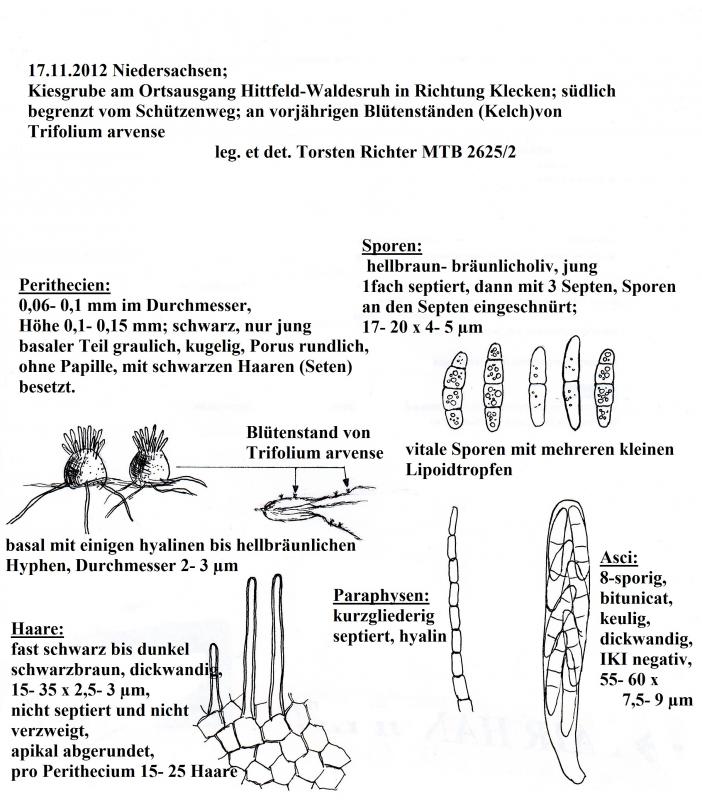
Salvador Tello,
01-01-2013 20:41
Re : Setose ascomata on Trifolium arvense
¿Podría ser Capronia?
Saludos.
Salvador.
Perdón, no había leido bién.
Saludos.
Salvador.
Perdón, no había leido bién.
Jaklitsch Walter,
03-01-2013 15:13
Re : Setose ascomata on Trifolium arvense
I would recommend to check literature on Trichometasphaeria and Keissleriella; the fungus might even be buried somewhere under Leptosphaeria or Metasphaeria.
Cheers,
Walter
Cheers,
Walter
Gernot Friebes,
03-01-2013 22:53
Re : Setose ascomata on Trifolium arvense
Thank you Salvador and Walter! I will compare this fungus to the genera Walter suggested, hoping to find some matching taxa.
Best wishes,
Gernot
Best wishes,
Gernot
Alain GARDIENNET,
04-01-2013 09:28

Re : Setose ascomata on Trifolium arvense
Yes Gernot, not so far away from culmifeda.
But on my personal culmifeda, the spores were less wide, and more constricted at primary septum, and on grass (A. canina).
Alain
But on my personal culmifeda, the spores were less wide, and more constricted at primary septum, and on grass (A. canina).
Alain
Jaklitsch Walter,
04-01-2013 11:45
Re : Setose ascomata on Trifolium arvense
alternatively, given the minute ascomata and occurrence on inflorescences, the fungus may have venturiaceous affinities or belong to the Pseudoperisporiaceae, e.g. to Nematostoma. The latter genus is e.g. known from Cirsium and Artemisia, but not Trifolium, as far as I know. Also, T. arvense is not a common species! One question in this respect is whether the fungus already occurs on living tissue.
Best regards,
Walter
Best regards,
Walter