
14-05-2026 05:36
Ethan CrensonHi all, I haven't paid much attention to Lachnu
11-05-2026 12:32
 Bernard CLESSE
Pourriez-vous m'aider à identifier cette héloti
13-05-2026 15:26
 François Freléchoux
Bonjour,Voici une récolte faite il y a quelques j
12-05-2026 15:41
 Nicolas VAN VOOREN
Dear Ascolovers, especially interested in Pezizale
13-05-2026 12:05
 Thierry Blondelle
Bonjour à tous,J'aimerais avoir confirmation de c
10-05-2026 23:17
 Andreas Gminder
Hello,today we found in a moist steep decidous for
28-04-2026 20:07
 Lothar Krieglsteiner
... on twig in the air at standing Ceratonia siliq
27-04-2026 20:52
Lothar Krieglsteiner
Found on hanging tiwg of Olea europaea in dried-ou
11-05-2026 20:22
Lothar Krieglsteiner
on attached twig of standing Ficus caricaquite uns
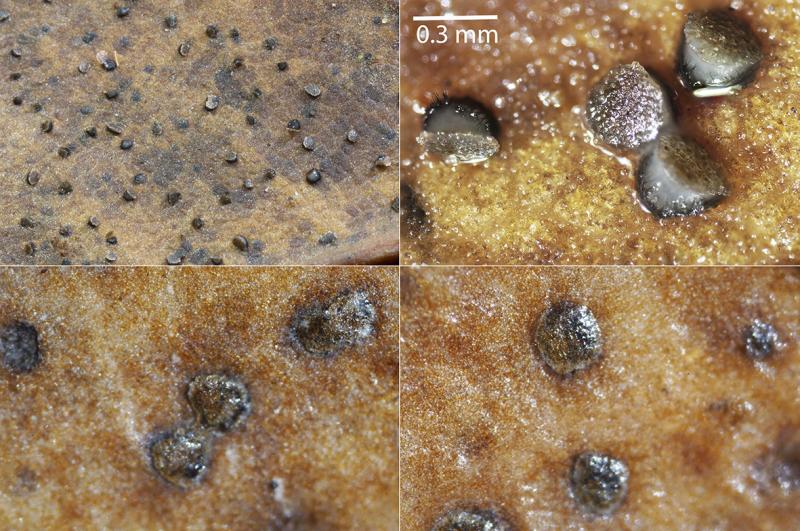
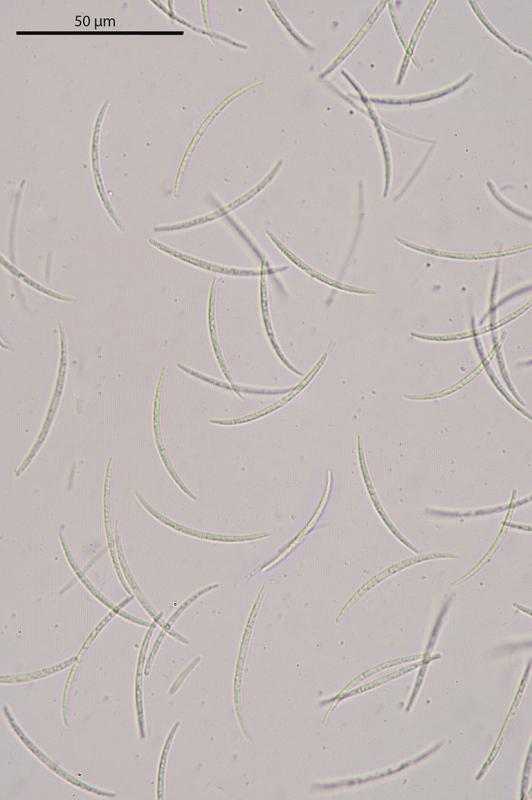
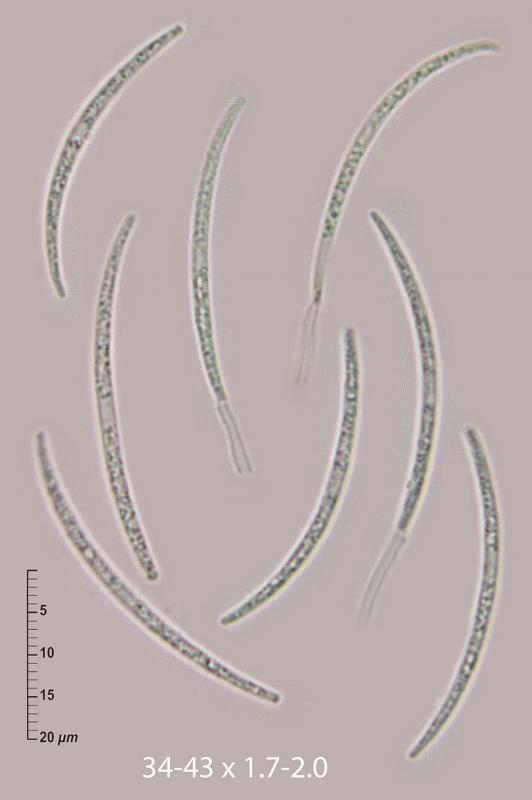
Conidiomata on Magnolia leaves
Enrique Rubio,
19-11-2019 20:05
 Dear all
I would very much appreciate any suggestion about this fungus growing on fallen dead leaves of Magnolia grandiflora at the sea level.
The conidiomata (acervular?) are 0.2-0.5 mm in diameter, are opened by means of a lid as in some genera of Helotiales (Hysterostegiella), and they are surrounded by a crown of dark brown setae up to 300 microns long. The conidia seem to be holoblastic, hyaline and sickle-shaped.
Many thanks for help me again

Hans-Otto Baral,
19-11-2019 20:20

Re : Conidiomata on Magnolia leaves
Looks like a Trochila by macroscopy! But possibly not related.