
25-03-2017 12:45
 Bernard CLESSE
Bonjour à tous,Voici ce que je pense être Hamato
24-03-2017 23:12
Bernard CLESSE
Bonsoir à tous,Voici ce que je pense être un Mol
23-03-2017 20:56
 Viktorie Halasu
Hello,my friend is looking for the paper by Granmo
24-03-2017 11:08
 Malcolm Greaves
This was found on fallen twigs in deciduous wet wo
23-03-2017 18:44
 Blasco Rafael
Hola, a ver si me pueden ayudar con esta muestra,
23-03-2017 14:55
 Castillo Joseba
En madera sin determinarPienso en Lasiobelonium va
22-03-2017 23:22
 William Slosse
I found following species in the garden on the und
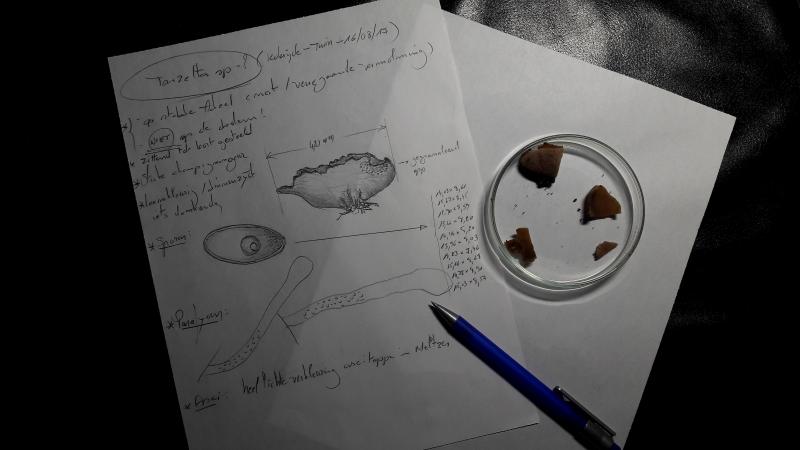
this species grows on decaying stumps of Abele in my wild garden.At first I thought Tarzetta sp but the species here grows on wood.
Short stipe to almost sessile.
Fruiting bodies >40mm
Odour: strongly mushroom.
Spores: 14.71x8.32mu with one oildrop
Ascitops colouring bleu in Meltzer
Any idea?
Sincerely,
William
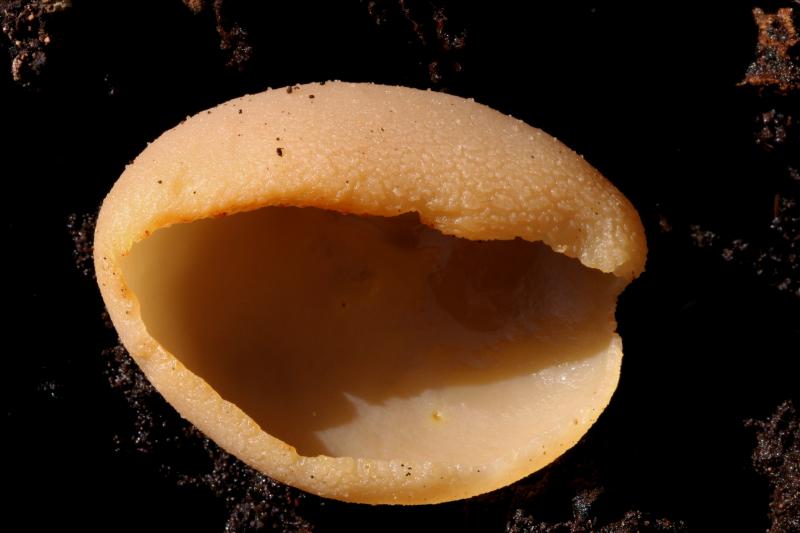
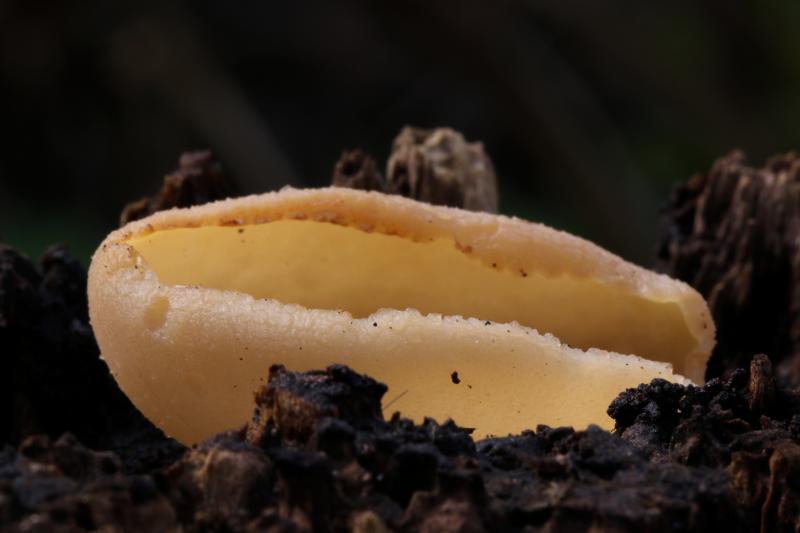
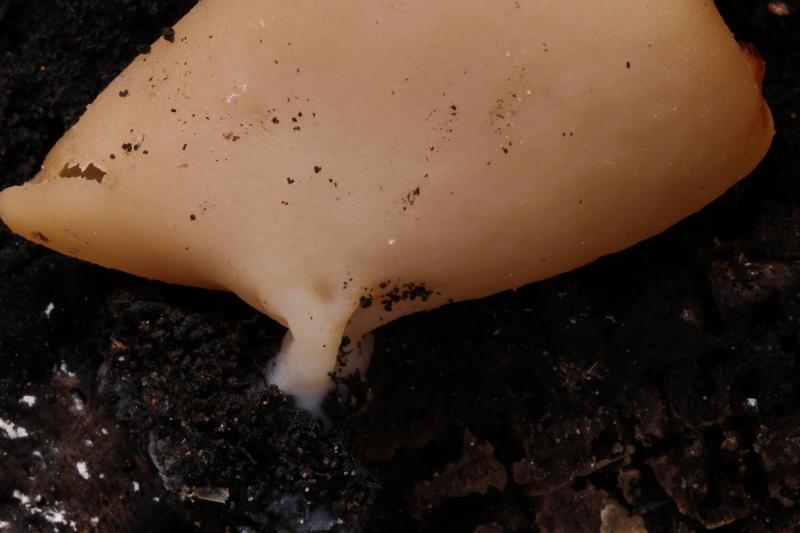
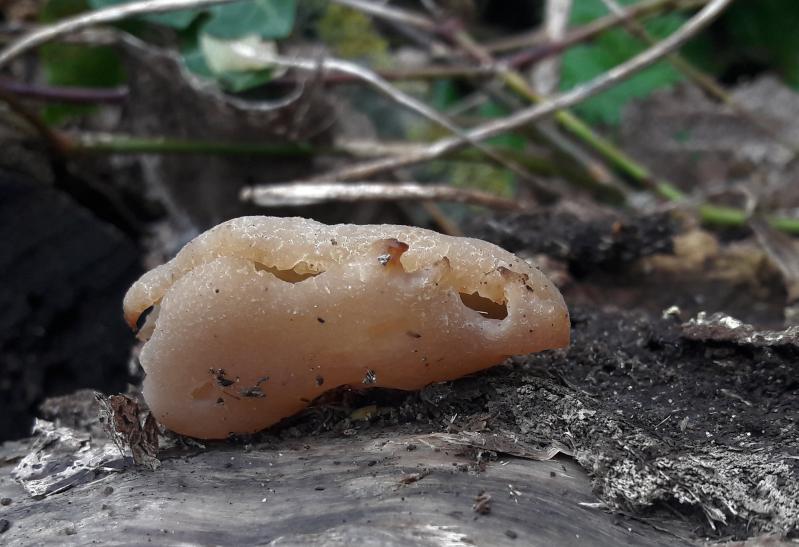
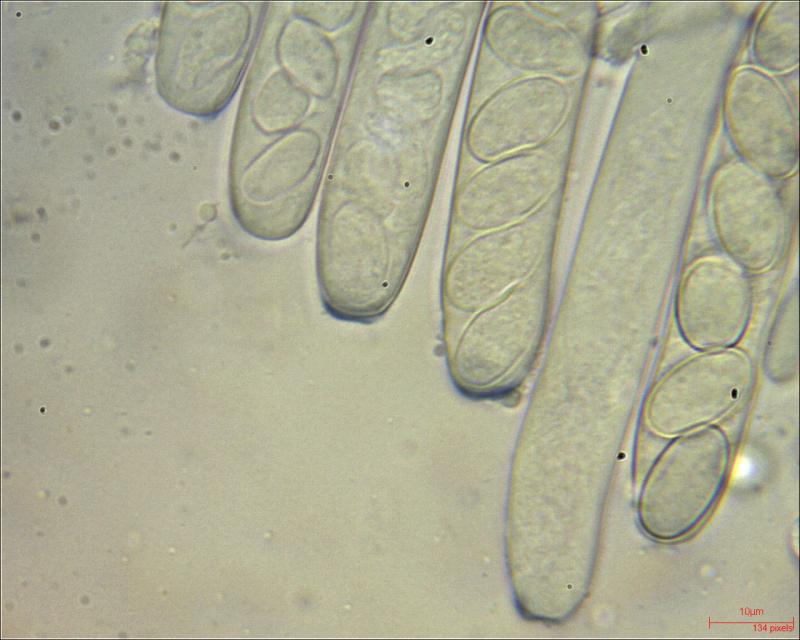
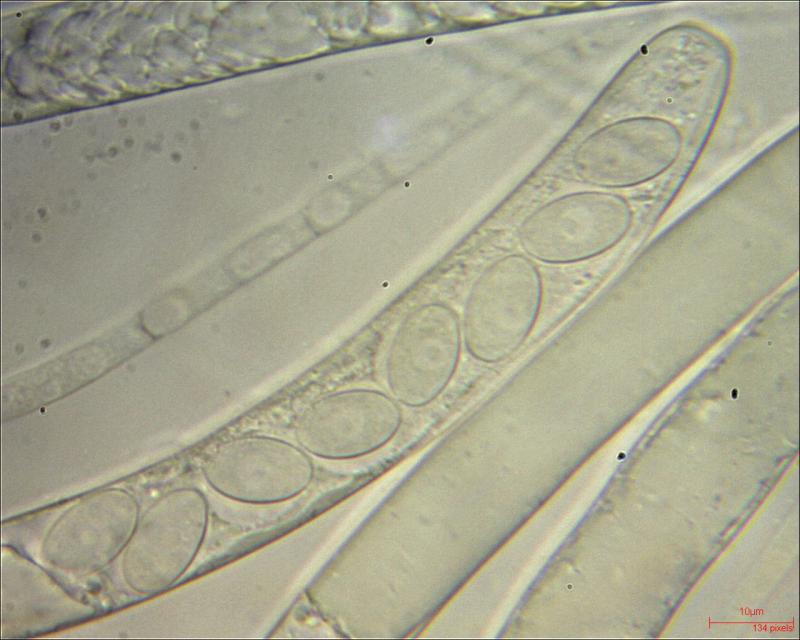
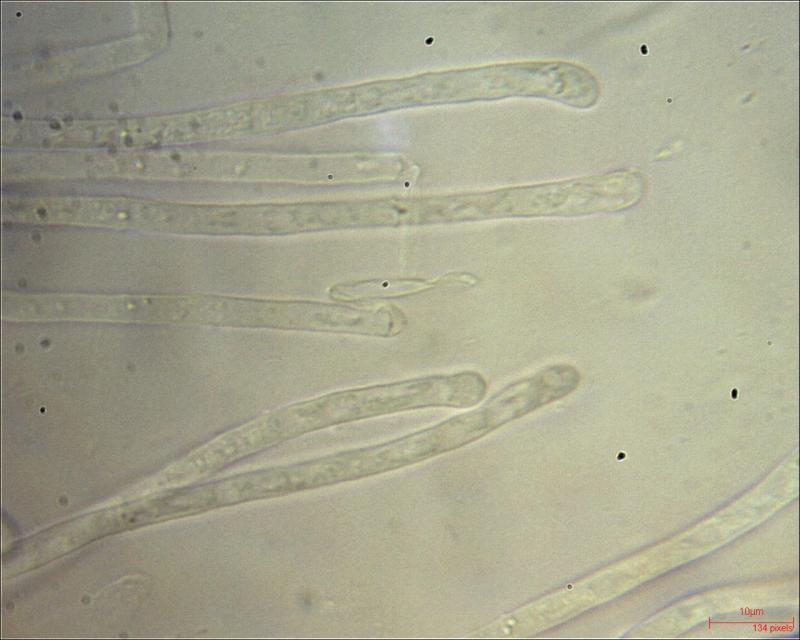
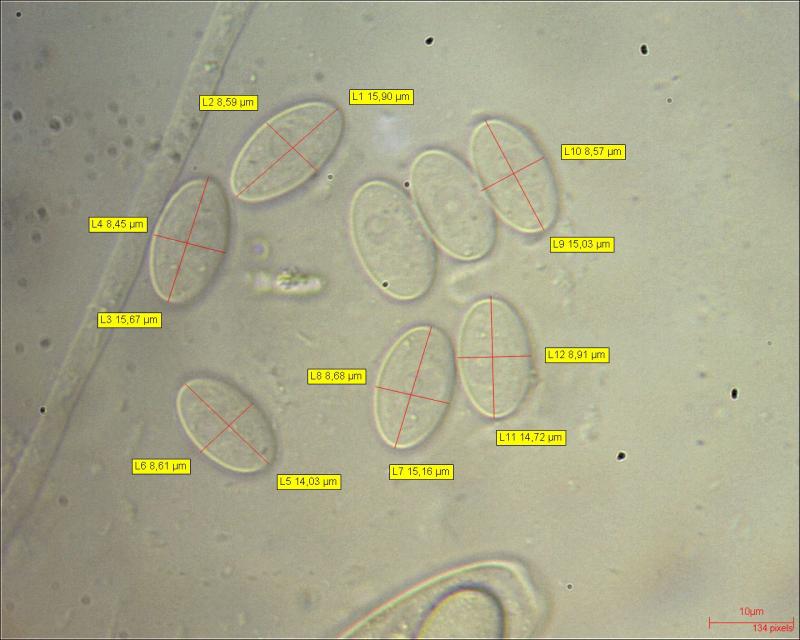

the asci from Tarzetta are not amyloid. In my opinion this is a species from the Peziza varia-group ("micropus") ?
Greetings Peter.
I have looked on it with the provisional key of B. Declercq and it looks indeed as a P.varia (syn. micropus).
Greetings,
William
the spores are actually eguttulate (it's a nucleus) and they also have a sheath (on the 7.photo). I had something from P. varia group with smooth spores and gel sheaths as well (bigger spores, though) and got some interesting comments here: http://ascofrance.fr/search_forum/43195
As for determination, I'm sorry I can't say more.
Viktorie

I'll attempt to answer, although with my rather short experience with microscopy I feel about the last person to ask.
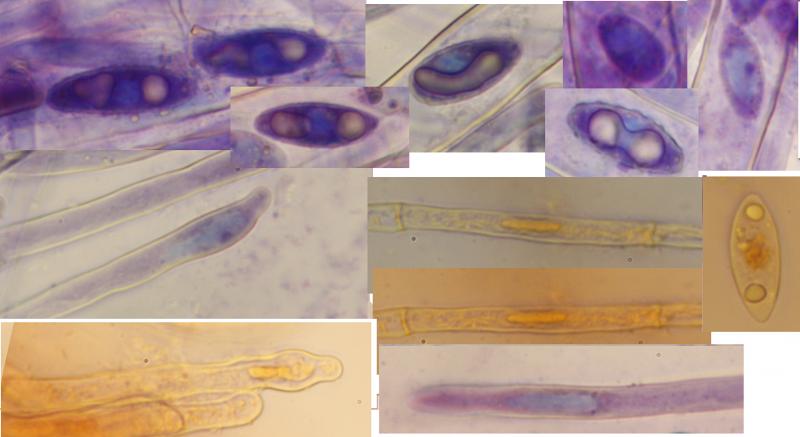
Lipid guttules are more visible than nuclei, more clearly demarcated (at least in living spores), while nuclei look more like an "empty space". I didn't try yet any stains for LBs. As for stains for spore nuclei: In living material they are well enough visible in water. Sometimes I try acetocarmine - nuclei become dull carmine red, against orange colored rest of spore contents. Mr. Dougoud described the proper method as follows:
"L'observation des noyaux n'est pas très facile, il faut laisser agir le carmin acétique durant quelques minutes, puis dissocier le prélèvement par percussion sur le couvre objet, ajouter encore une goutte de carmin au bord de la lamelle, attendre encore un peu, retirer l'excédant de liquide et observer."
Some genera (e.g. Arpinia) are not carminophilous. I have almost no experience with staining nuclei in paraphyses, cannot distinguish them from other structures.
Giemsa solution can be used as well, T. Schumacher used it in his monographs of Scutellinia and Myriosclerotinia (with L.Kohn), staining method is described in the latter (Can. J. Bot. 63: 1610-1640). Never tried myself, here it's more problematic to obtain the solution when one doesn't work in a lab.
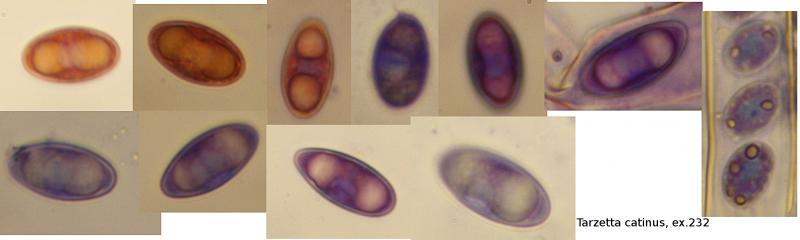
I tried CRB too, here's the result with Jafnea semitosta, but it stained only submature spores. Nucleus is blue, lipid bodies dirty yellowish, rest of cytoplasm violet. The other photo is of Tarzetta catinus - when a little of KOH is added to the CRB, spore cytoplasm discolors to dirty red, but the nucleus stays bluish for a while. Many operculates have thickwalled spores so that only submature spores can be stained. I suppose the stains might be more useful for inoperculates, where the variation of number of nuclei is perhaps bigger - it helped me to distinguish Dumontinia tuberosa (4 nuclei).
Hope it helped a bit.
Viktorie
(I took the liberty to download the scans from cybertruffle and convert it into double-sided pdf: http://tmp1.vize.name/myko/Vital_taxonomy.pdf )