
06-05-2026 17:23
Thomas Læssøehttps://svampe.databasen.org/observations/10594257
06-05-2026 11:25
 Castillo Joseba
Me mandan el material seco de Galicia (España) re
28-04-2026 20:07
 Lothar Krieglsteiner
... on twig in the air at standing Ceratonia siliq
05-05-2026 22:40
Gernot FriebesHi,I believe this is a Plagiostoma growing on a Sa
04-05-2026 18:13
 Stephen Martin Mifsud
ID request for what seems to be a true aquatic fun
04-05-2026 16:39
Stephen Martin Mifsud
ID request: This specimen was collected in Malta o
28-07-2011 18:31
 Alex Akulov
Dear FriendsToday I made the pdf file of Velenovsk
04-05-2026 09:50
Castillo Joseba
Me mandan el material seco de Galicia,(España) re
02-05-2026 12:42
Alain BRISSARDBonjour à tousJeuidi 30 avril dernier on m'a remi
 Sur bourgeon de Rhododendron. Je suis pratiquement certain qu'il s'agit de Pycnostysanus azaleae mais comme c'est la première fois que je le vois, je souhaiterais une confirmation.
Conidies variables de forme : ellipsoïdes, subglobuleuses, citriformes, fusoïdes… : 5,5-11x5-5,5
Bernard
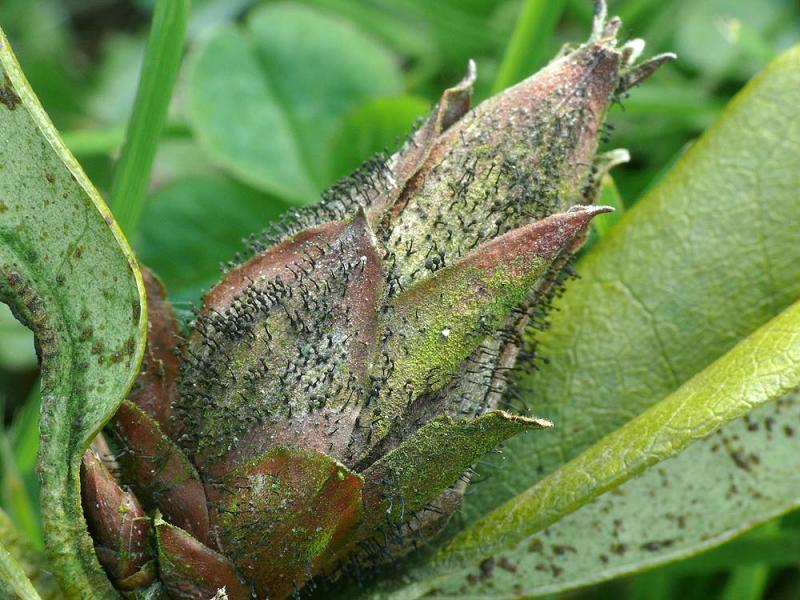
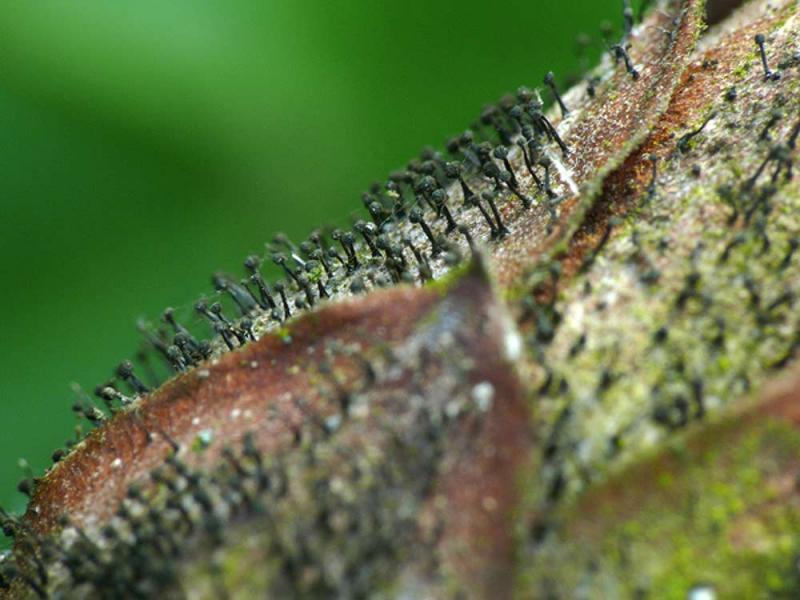
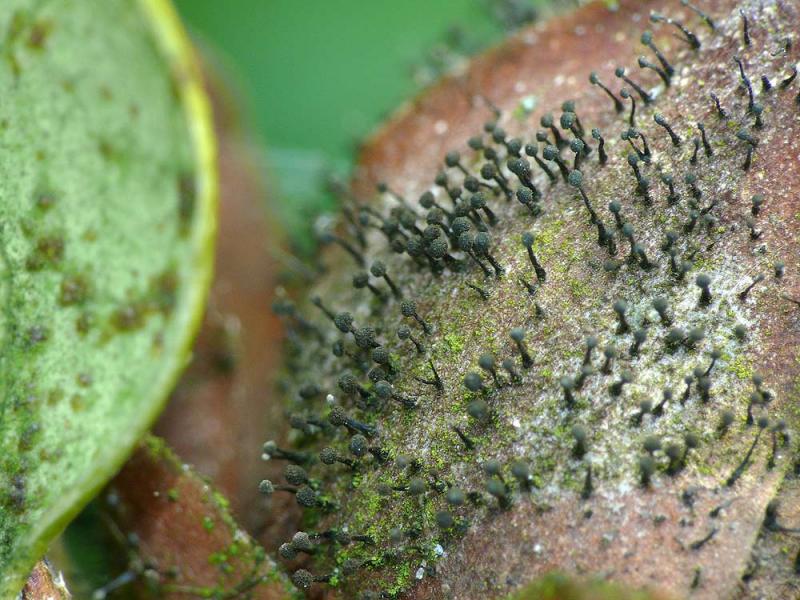
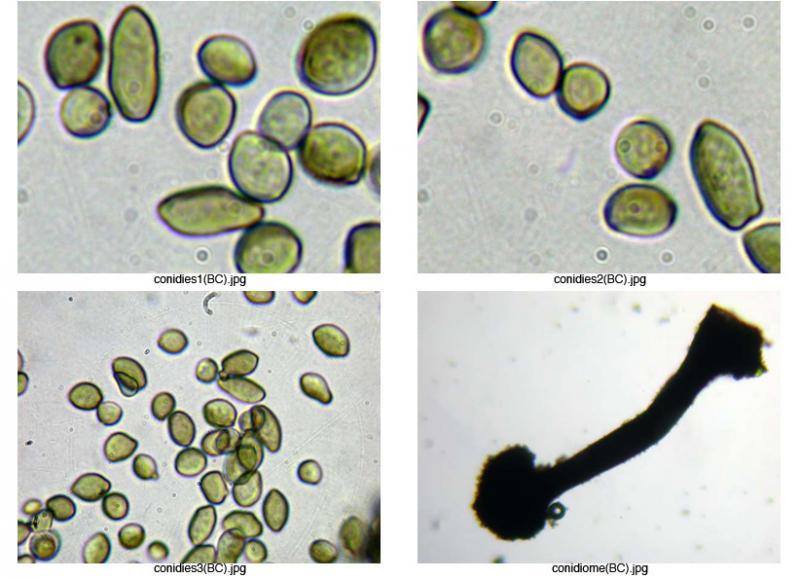
Dear Bernard,
your determination is correct. The species is quite common on cultivated Rhododendron and is transfered by the cicada Graphocephala fennahi (which is quite beautiful!).
Regards from Lothar
Thank you for your confirmation, to update the name of the fungus and the name of the cicada responsible for the appearance of the fungus!
Sincerely,
Bernard
Hello All,
Looks like this disease of Rhododendrons is spreading. It occurs regularly each year on a hybrid shrub in our garden in North Argyll, Scotland.
What is a puzzle, is what is the transmission agent as we are definitely not within range of Cicadas!
Kind regardes,
Peter

We're in range - Graphocephala fennahi (Graphocephala coccinea) is a leafhopper related to cicada's: http://scholar.lib.vt.edu/ejournals/JARS/v34n4/v34n4-wheeler.htm
And yes, a very distinctive looking beastie!
With regards,
Jenny